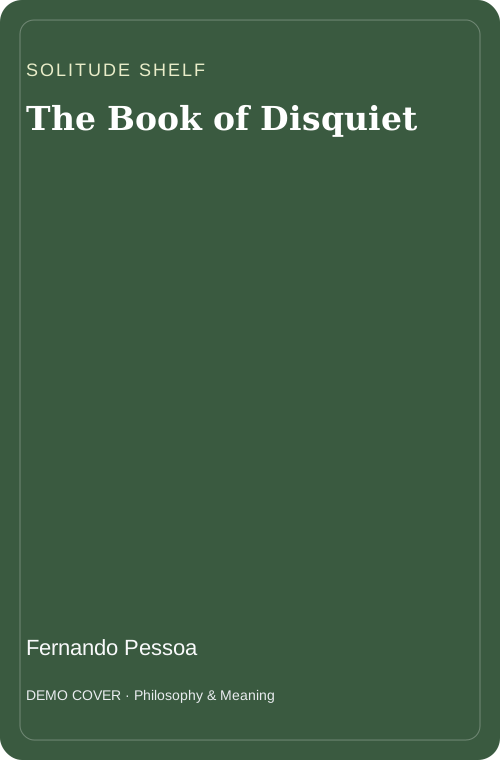
Is The Book of Disquiet right for you?
One of the most interior books on this shelf: fragmented, melancholy, observant, and better wandered through than “completed” efficiently.
Some lonely nights are not solved by more tips. They open larger questions about meaning, mortality, freedom, regret, attention, and the kind of life worth building. This shelf is for that register. The books are not always comforting, but they can make an unsettled inner life more intelligible.
Treat this as a slow read. Older language, ambiguity, density, or emotional difficulty may be part of the experience rather than a flaw to eliminate.
What this book adds to a solitude reading list
The core lens is what solitude reveals when the question is not “how do I feel better?” but “how should I live?”. That matters because a good solitude library should not flatten every form of being alone into the same experience.
- A larger frame for questions that ordinary self-help can make feel too small
- Concepts for thinking about meaning, time, mortality, freedom, and attention
- A slower kind of companionship: not an answer key, but a mind worth thinking beside
Who should read it — and who may want something else
Read this if…
- You are drawn to existential, Stoic, spiritual, or contemplative questions
- You prefer depth and ambiguity to quick reassurance
- You want a book that can be reread rather than merely completed
Try another shelf if…
- You need immediate practical social advice
- You are frustrated by abstraction, ambiguity, or older prose
- You want a simple program with measurable weekly steps
Three things to pay attention to
- 1Do not ask only whether you agree. Ask what question the author is forcing you to confront.
- 2Distinguish ideas that are historically interesting from ideas that genuinely change how you see your own choices.
- 3Let difficult passages remain difficult for a while; premature simplification is especially costly with philosophical books.
Read slower than you think you need to. One page with a real question is worth more than twenty pages skimmed for quotable lines.
Three nearby books worth checking
If this title is close but not quite right, compare it with these before choosing an edition.