Book Details
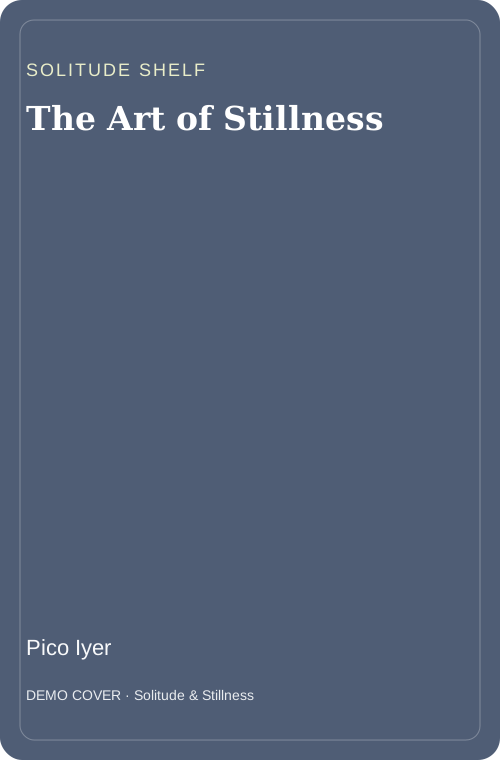
- Author
- Pico Iyer
- ISBN-13
- 978-1476784724
- Publisher
- Simon & Schuster/ TED
- Format
- Paperback
- Pages
- 96
- Published
- November 4, 2014
- Subject
- Solitude & Stillness · Stillness
Is The Art of Stillness right for you?
A short, elegant entry point when you want the case for stopping, noticing, and protecting an inner margin without committing to a long program.
This shelf is for readers who do not want a generic productivity book or a generic loneliness book. It asks a narrower question: what can time alone become when it is chosen, protected, and examined rather than merely endured?
This is a good entry point for the theme. You do not need specialist background; read for one or two ideas you can carry into ordinary life.
What this book adds to a solitude reading list
The core lens is the difference between restorative solitude and accidental isolation. That matters because a good solitude library should not flatten every form of being alone into the same experience.
- A clearer language for separating healthy aloneness from disconnection
- A quieter frame for attention, reflection, and deliberate living
- Ideas you can test in ordinary routines without turning solitude into a performance
Who should read it — and who may want something else
Read this if…
- You want to become more comfortable with your own company
- You are trying to reduce noise, interruption, or compulsive distraction
- You want reflection without being pushed immediately toward social solutions
Try another shelf if…
- What you need most right now is practical help rebuilding relationships
- You want a fast, checklist-heavy self-help program
- You are looking mainly for plot-driven fiction rather than reflective reading
Three things to pay attention to
- 1Notice how the author defines solitude: as freedom, discipline, refuge, attention, or something else.
- 2Separate ideas that sound beautiful from ideas you could actually live with for a week.
- 3Watch for the point where chosen solitude can shade into avoidance; that boundary matters more than the aesthetic of being alone.
Read in short, unhurried sessions. After a useful passage, stop and ask what would change in your next ordinary hour if you took the idea seriously.